Roebling Labs performs real-time risk assessment for AIS-equipped vessels by combining transponder tracking, trajectory forecasting, and AASHTO impact analysis.
Vessels transmit AIS packets as often as every two seconds. Our system analyzes the received data within about one second to estimate risk of a ship-bridge collision.
Risk = Probability × Consequence
- Probability: Vessel trajectory forecasting informs the likelihood that the ship may collide with the bridge.
- Consequence: AASHTO impact analysis informs how likely the bridge is to collapse upon collision from the subject vessel.
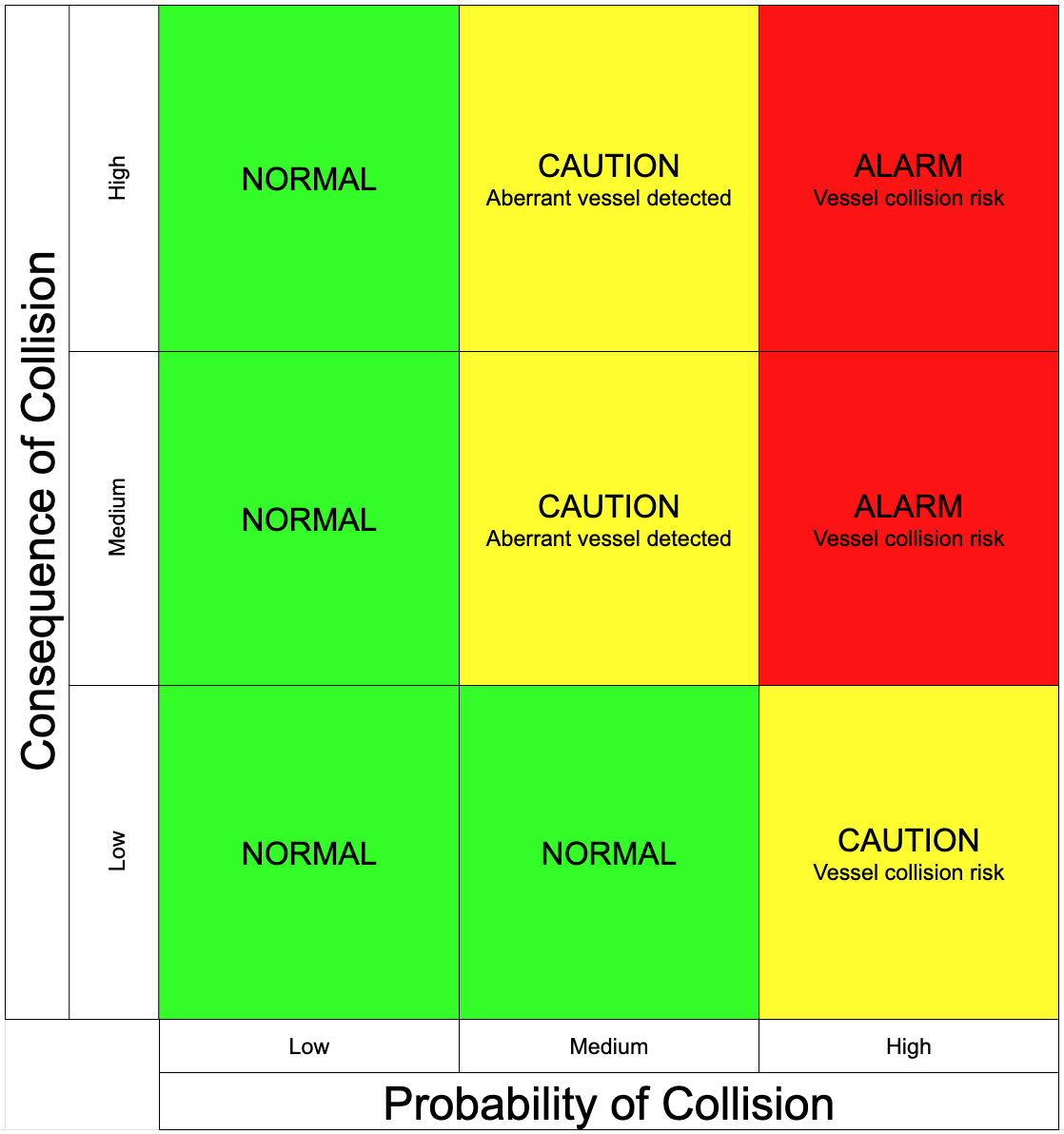
Each vessel’s consequence, probability, and, therefore, risk ratings update in real time as its speed, location, heading, course, and rate of turn change.
The purpose of this blog post is to discuss consequence rating. Future blog posts will delve into probability rating and provide real-world examples of different risk levels.
How We Analyze Consequences
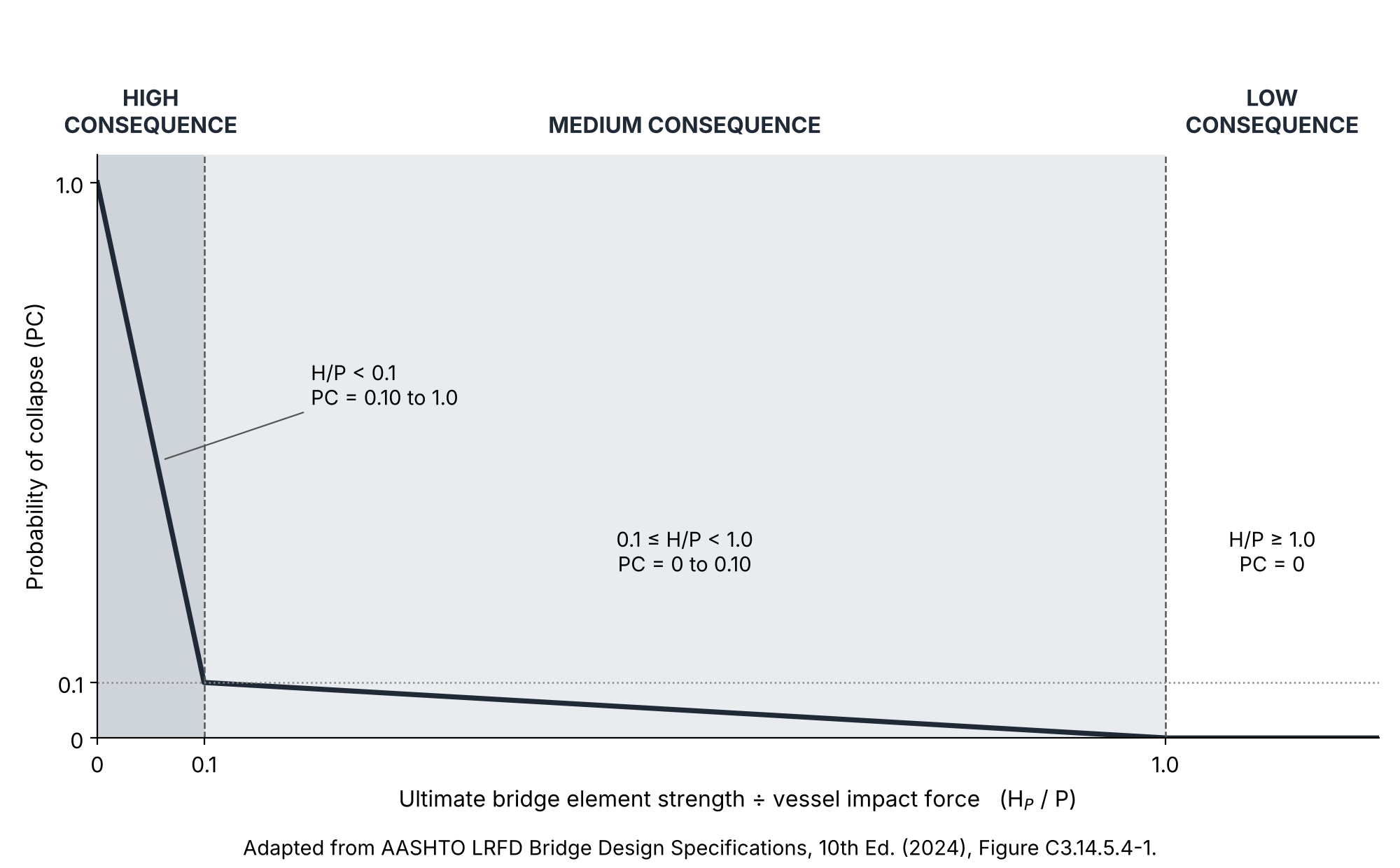
Consequence rating relates to the probability that the bridge will collapse once it has been struck by an aberrant vessel. Assuming a direct impact of the vessel with a pier, here is how we think about each consequence level:
- Low Consequence: Negligible probability of bridge collapse.
- Medium Consequence: Less than 10% probability of bridge collapse.
- High Consequence: Greater than 10% probability of bridge collapse.
Our consequence rating methodology maps directly onto Article 3.14.5.4 of the AASHTO LRFD Bridge Design Specifications, 10th Edition, 2024, as shown in Figure 2.
AASHTO ties collapse probability to one ratio: the pier’s ultimate lateral strength (HP) divided by the vessel’s impact force (P). We calculate P with AASHTO’s formula (Equation 3.14.8-1). The inputs are the vessel’s deadweight tonnage (DWT) and speed. We pull DWT from U.S. Coast Guard and European vessel databases. For local vessels not in those databases, we estimate DWT from the vessel’s length overall (LOA) using a model.
What the Alert Levels Mean
The risk matrix in Figure 1 combines Probability and Consequence into one of three alert levels for each vessel. A large, high-consequence vessel can show green: what matters is whether it is likely to strike a pier, not only the size of a potential impact force.
- Normal (green): Collision is unlikely, or a collision would not threaten the bridge structure.
- Caution (yellow): The vessel is behaving abnormally and a collision would be serious, or a collision is likely but would not threaten the bridge structure.
- Alarm (red): A collision is likely, and it could seriously damage the bridge or cause collapse.
Medium and high consequence vessels receive the same alert levels. Bridge owners want to know about any potential collision by a medium consequence vessel. Even if bridge collapse is unlikely, collision from a medium consequence vessel would be a serious incident that would be expected to frighten the public on the bridge and cause structural damage.