Roebling Labs builds vessel collision warning systems for vulnerable bridges. That's it. Our company is 100% devoted to solving this problem.
The NTSB got our attention when they recommended that federal agencies research the feasibility of creating a vessel collision warning system for vulnerable bridges, in response to the Key Bridge collapse.
We didn't need research. We decided to build it. Quickly.
We were already focused on combining bridge engineering with hardware + software solutions.
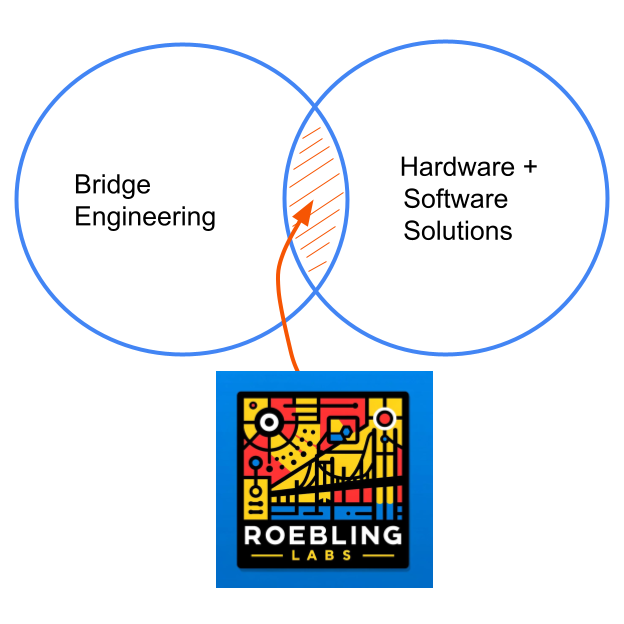
How we got here
Roebling Labs wasn't founded to build collision warning systems. We started the company almost two years ago with a broader mission: build bridge assessment tools for bridge owners. We initially focused on structural health monitoring because existing solutions were expensive and had failed to become practical tools for everyday bridge management.
We tried several approaches:
- A smartphone app to measure bridge vibrations
- A dashboard for crowdsourced bridge monitoring using vehicle accelerometer data
- Computer vision bridge monitoring
Then we saw the NTSB recommendations following the Key Bridge collapse investigation. NTSB initially named 68 bridges in the U.S. that face similar risk profiles—built before 1991 over waterways navigable by ocean-going vessels. (The list has since been whittled to 46 vulnerable bridges.)
Suddenly we had an urgent problem, a defined market, and a clear technical path. We pivoted.
Within weeks we had working prototypes for real-time threat ranking of vessels. We combine AIS vessel transponder data with trajectory forecasting and AASHTO impact analysis.
We may come back to computer vision for bridge monitoring in the future. As costs fall and capabilities rise, this technology presents exciting opportunities.
But, right now, vessel collision warning is where Roebling Labs can make the biggest difference. We are all in.
Next Steps
We've built a working hardware + software prototype.
Our next step is to deploy our prototype into the field and get feedback.
We procured a waterfront location to deploy our hardware at the Chelsea Yacht Club next to the Tobin Bridge and near our offices in Cambridge, MA.
We met with chief engineers at owner agencies with bridges on the NTSB vulnerable list and hope to pilot our technology with them soon.
These pilot projects will take our prototype to be an operational life-safety system over the coming months.
Follow our progress. Subscribe below.
If you are an engineer that works with a vulnerable bridge, please contact scott@roeblinglabs.com to learn how to deploy our solution at your site.